Breast Implant Revisionin Scottsdale, Arizona
Breast revision surgery in Scottsdale is typically performed to address complications or long-term changes from a previous breast surgery. These can include asymmetry, capsular contracture, and skin stretch.
The Basics of Breast Revision Surgery
The goals of revision breast surgery include:
- Restoring a natural, youthful appearance
- Achieve or improve symmetry of the breasts
- Obtain a well hidden, minimally noticeable scar
- Obtain a long lasting result
- Avoid complications
Dr. Stutman could help a particular Scottsdale patient understand whether a breast revision surgery would help achieve their unique cosmetic goals.
Before & after
Breast Implant Revision before & after
Actual patients of Dr. Stutman
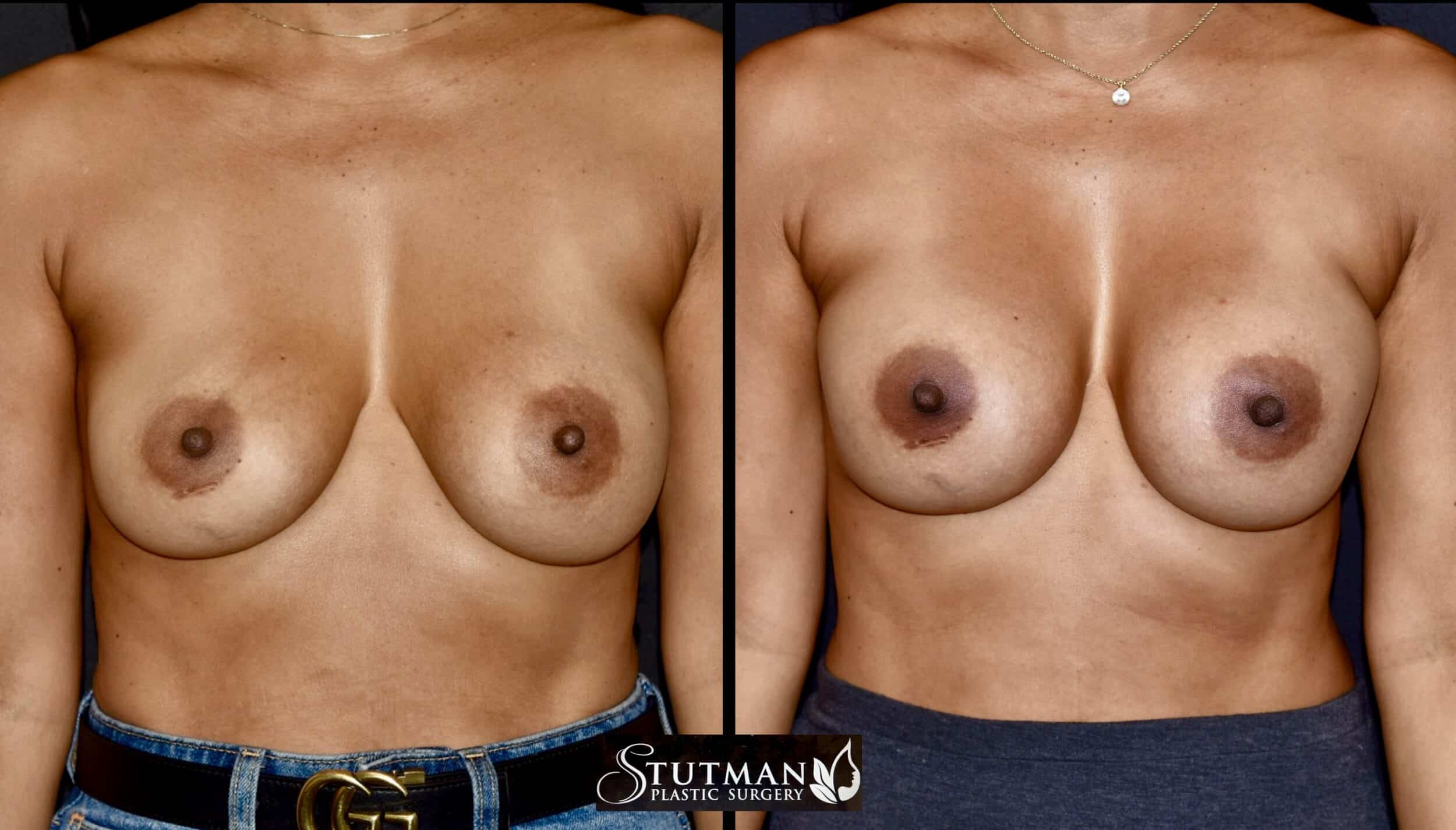
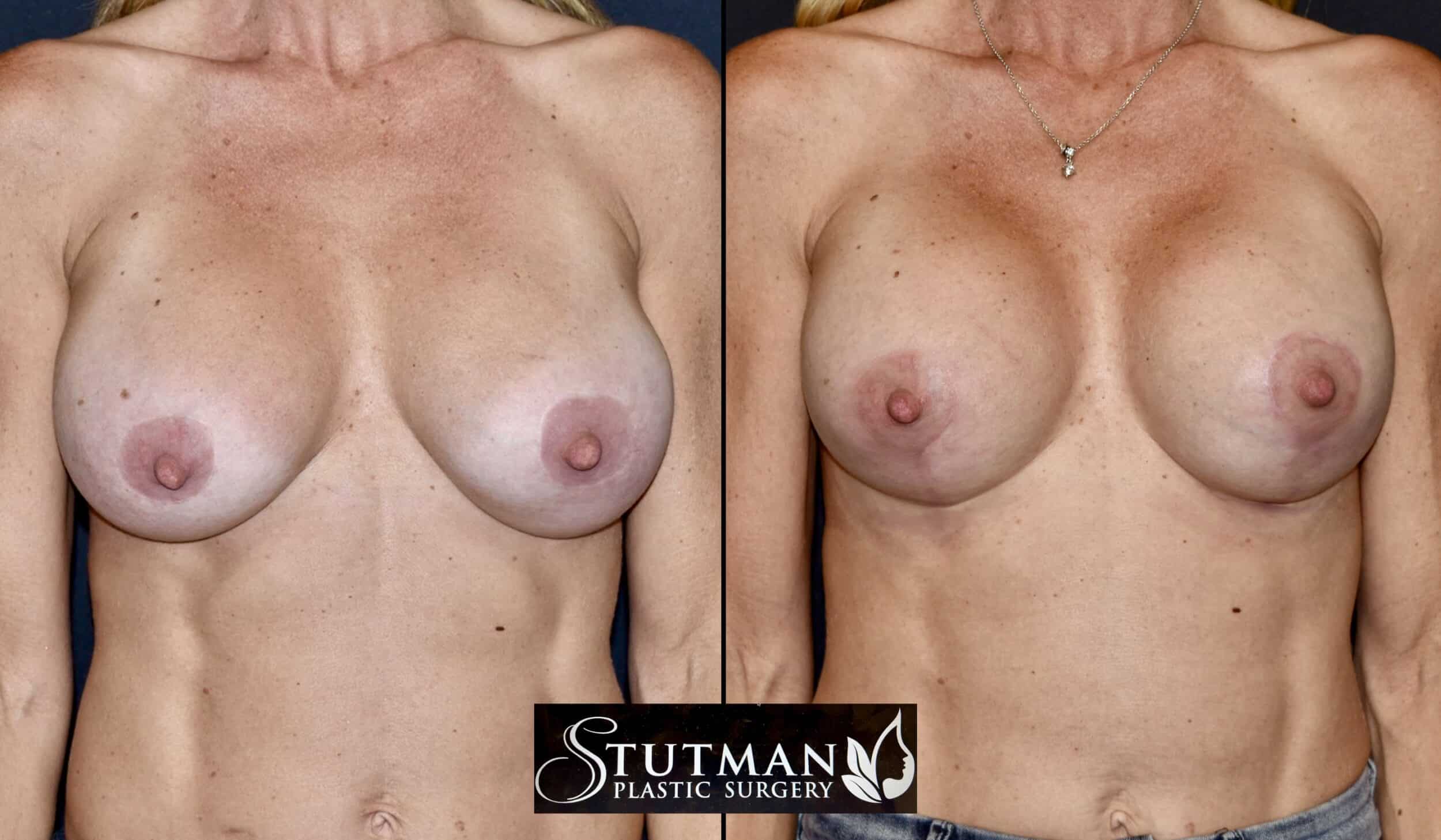
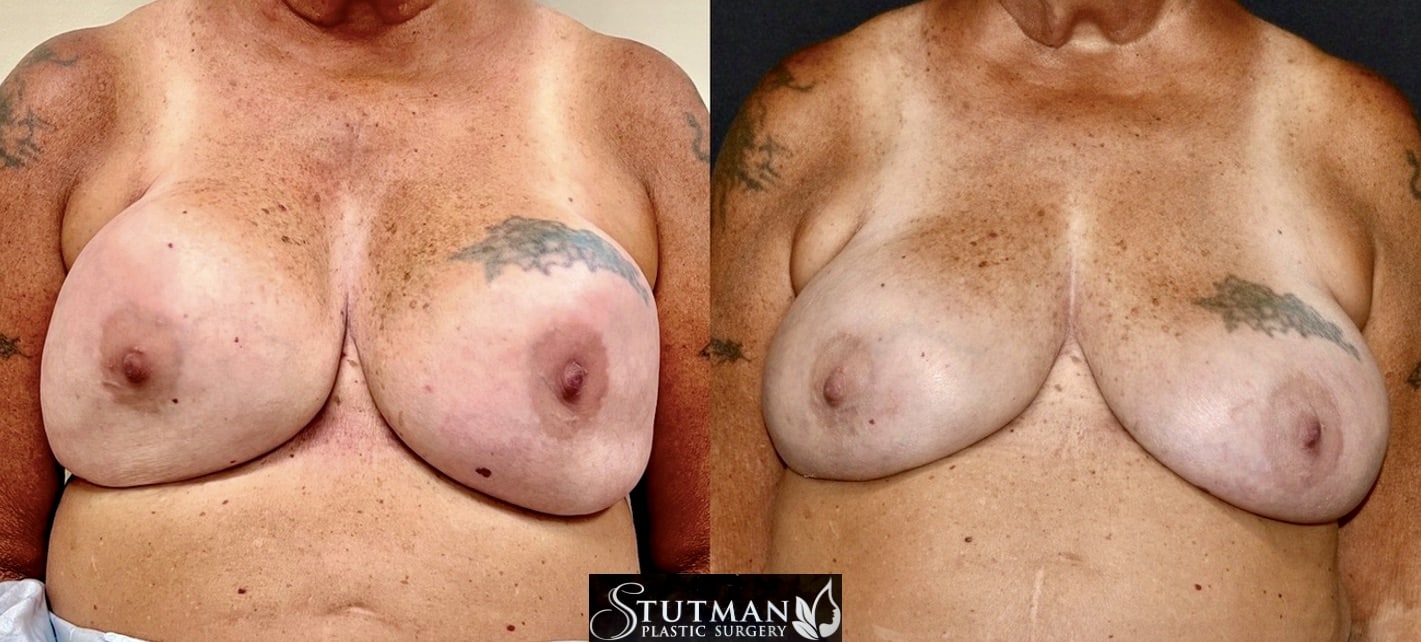
Individual results may vary.
View the galleryWho Is a Good Candidate for a Revision?
Women frequently seek this operation after their breasts change over the years following their original breast surgery.



The Revision Surgery Explained
Under general anesthetic, an incision is made either at the inframammary fold, or around the areola. Dr. Stutman then goes underneath the breast tissue until he encounters the original breast implant. He then removes the implant along with the capsule of fibrous tissue that normally surrounds the implant. The new implant is then placed either above or below the muscle. Occasionally, Dr. Stutman might place the new implant in a different plane (above or below the muscle) than the original one in order to improve the appearance or decrease the risk of contracture. At this point, he will perform a lift if needed. The results are then evaluated. Once he is happy with the appearance of the breasts, the incisions are closed, and the dressings applied.
What Incisions Does Dr. Stutman Use?
For revision breast surgery, Dr. Stutman tries to use the same incision as the original surgery, in order to minimize scars on the breast. With revision surgery, our team frequently needs to do a breast lift as well, and therefore a scar around the areola is used.
Recovering From a Breast Revision
You will spend a couple of hours in the recovery room at the surgery center before you go home. You will need someone to pick you up from the center and stay with you in your home overnight. You may feel up to going for a walk later that evening or the following day. Over the next week to two weeks, you will feel better and better and slowly resume your usual activities. However, it could be a full 6 weeks before you feel completely recovered from your surgery.

Does a Revision Procedure Have Any Drawbacks?
Revision surgery is more technically difficult than primary surgery due to scarring, capsule formation and tissue changes, and the results are less consistent. This surgery does not halt the aging process of the breasts, and in fact can accelerate it. Over time, the weight of the implant can cause the skin of the breast to stretch, leading to the need / desire to undergo a breast lift. Larger implants accelerate these changes.

The Risks of a Breast Revision
As with any surgery, there is a possibility of experiencing a complication. These include bleeding after the surgery (hematoma), decreased sensation in the breast or nipple, infection, asymmetry of the breasts, implant malposition, capsular contracture, re-operation and others. It is important to discuss these in detail prior to undergoing this surgery.
Speak With Dr. Stutman About a Breast Revision in Scottsdale
If you need to touch up, reconsider, or improve the results of a previous breast procedure, you should consider a breast revision in Scottsdale. Dr. Stutman can perform this procedure with care to ensure that you achieve the impactful results you desire. Call today to discuss your goals and learn more about your breast revision options.


Why patients choose Dr. Stutman for breast implant revision
- Board certified
- Certified by the American Board of Plastic Surgery and a member of the American Society of Plastic Surgeons.
- Fellowship trained
- Oculoplastic and aesthetic surgery fellowship with Dr. Mark Codner in Atlanta.
- Published research
- Peer-reviewed research in aesthetic and reconstructive plastic surgery, indexed in PubMed.
- One surgeon throughout
- Dr. Stutman sees you at consultation, performs your procedure and follows your recovery.
Breast Implant Revision
FAQs
- What is capsular contracture and how is it fixed?
- What are the signs my breast implant has ruptured?
- Can I change my implant size with breast revision?
- Can I have my breast implants removed without replacing them?
- Why do breast implants shift or sit in the wrong place?
- Has Dr. Stutman published research on breast implant complications?
- Why does implant contamination matter for breast revision?
What is capsular contracture and how is it fixed?
Capsular contracture happens when the scar tissue capsule that naturally forms around an implant tightens and squeezes it, making the breast feel firm, look misshapen, or ache. Mild cases may not need treatment. When surgery is needed, the surgeon usually removes the tight capsule and places a new implant. Dr. Stutman explains the right approach after examining you.
What are the signs my breast implant has ruptured?
With saline implants, a rupture is usually obvious because the implant deflates and the breast gets smaller. A silicone rupture is often silent, since the gel tends to stay inside the scar capsule. Some people notice a change in shape, firmness, or tenderness. An MRI or ultrasound is the usual way to confirm a silicone rupture.
Can I change my implant size with breast revision?
Yes, changing size is one of the most common reasons for breast revision. You can go larger or smaller, and the implant shape or profile can change too. Going larger depends on whether your skin and tissue can support it, and going smaller may leave extra skin. Dr. Stutman reviews what your tissue can safely handle.
Can I have my breast implants removed without replacing them?
Yes, you can have your implants removed and not replaced. This is often called explant surgery. Patients choose it for many reasons, including complications, health concerns, or simply no longer wanting implants. The surgeon may also remove the scar capsule. Your breasts will be smaller and may look deflated, so some patients add a lift at the same time.
Why do breast implants shift or sit in the wrong place?
Implants can shift when the pocket stretches, the tissue under the breast thins, or scar tissue pulls the implant out of position. This can cause an implant to sit too low, too high, too far to the side, or too close to the other implant. Heavier implants and weak tissue can add to the risk. Dr. Stutman can identify the cause.
Has Dr. Stutman published research on breast implant complications?
Yes. Dr. Stutman has published peer-reviewed research on breast implant contamination and nipple shields in the Aesthetic Surgery Journal, on how breast augmentation incision choice relates to complications in Aesthetic Plastic Surgery, and on tissue expander infection in breast reconstruction in The Breast Journal. Those topics connect directly to the problems that lead many patients to revision.
Why does implant contamination matter for breast revision?
Bacterial contamination of an implant during surgery is one of the leading theories for why capsular contracture develops, and capsular contracture is a common reason for revision. Dr. Stutman has published research on implant contamination, so lowering that risk is part of how he thinks about revision. He can explain the steps he takes at your consultation.

Consultation
Begin with a conversation
Your consultation is a private conversation with Dr. Stutman about your goals, your questions, and the options that suit you.
(602) 853-4646Contact pageRequest a consultation
Tell us a little about what you are considering and our team will call you to arrange your visit.
Request a ConsultationPrefer to talk? Call (602) 853-4646