Blepharoplasty Recoveryin Scottsdale, Arizona
Blepharoplasty surgery, commonly called eyelid surgery, removes excess fat pads and skin from the upper and lower eyelids. This results in a refreshed and rejuvenated appearance that makes you look more alert and younger. While blepharoplasty can address puffy, baggy under-eyes, the surgery cannot remove dark circles. This simple procedure can dramatically improve your appearance.
What to Expect During Recovery After Blepharoplasty Surgery
Blepharoplasty is typically an outpatient procedure that can be done independently or with other facelift surgeries. After the procedure, Dr. Stutman usually applies ointment to the eyelids.
You typically spend two hours in the recovery room before being able to go home. While it is an outpatient procedure, you will not be allowed to drive yourself home after receiving anesthesia. You can expect your eyelids to be bruised and swollen and feel tight from swelling.
You should keep your head elevated for the first 48 hours, including while sleeping and lying down. Using special ice pads over the eyes for the first 24 hours can help reduce swelling and discomfort. You can expect some oozing from the incision lines for the first one to three days. Between days five and seven, Dr. Stutman will remove your sutures. However, it can take several weeks to experience complete recovery.
During recovery, your eyes might be dry, irritated, or light sensitive. Following the post-operative instructions carefully, including using eye drops and ointments, helps reduce the potential risk for infection. Most people can return to light activities, such as reading and using the computer, within the first week, but you should avoid strenuous exercise and lifting for at least two weeks.
Typically, the bruising begins to subside after 10 to 14 days, and more people feel comfortable returning to social activities. After the initial healing is complete within the first three weeks, results may not be visible for several months. After the initial healing is complete within the first three weeks, end results may not be visible for several months.
While the scars fade, they are also generally well concealed. You should avoid direct sun exposure for the first several months and beyond to prevent scars from darkening. Sunglasses and a hat can add protection when you are outdoors. When you adhere to Dr. Stutman’s post-operative recommendations, you have a higher chance of experiencing a smooth recovery from your blepharoplasty in Scottsdale.

Before & after
Blepharoplasty Recovery before & after
Actual patients of Dr. Stutman
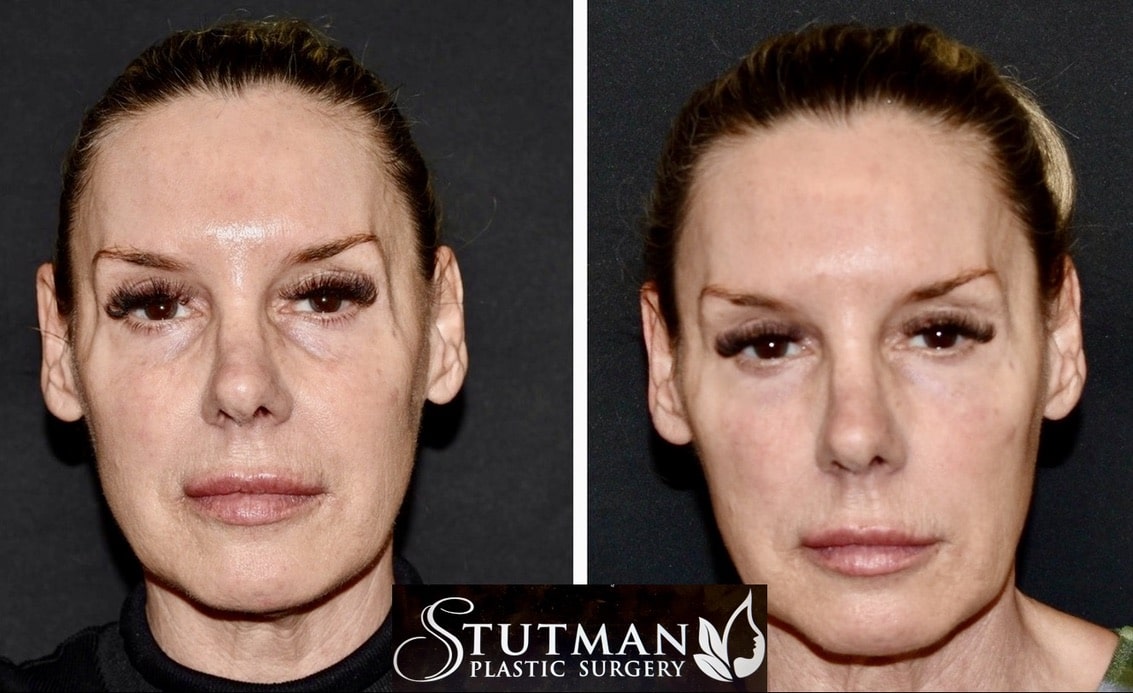
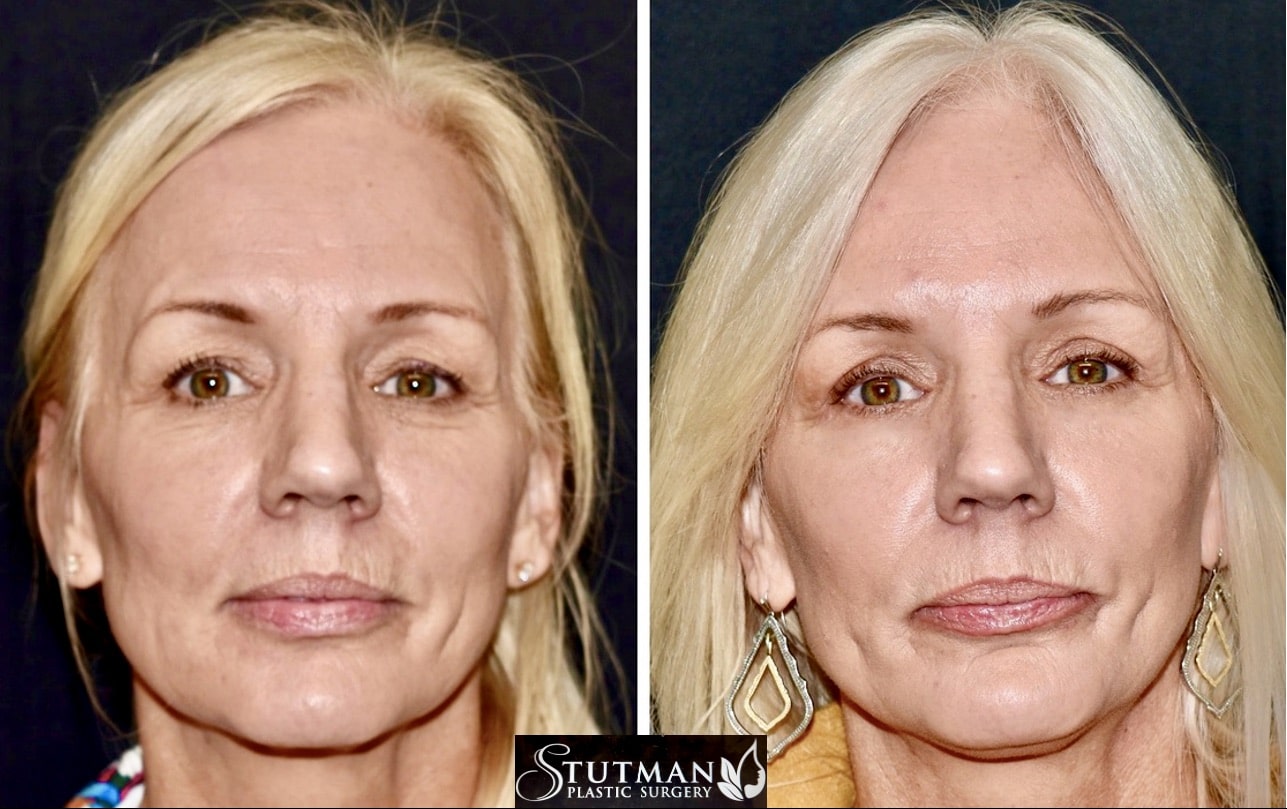
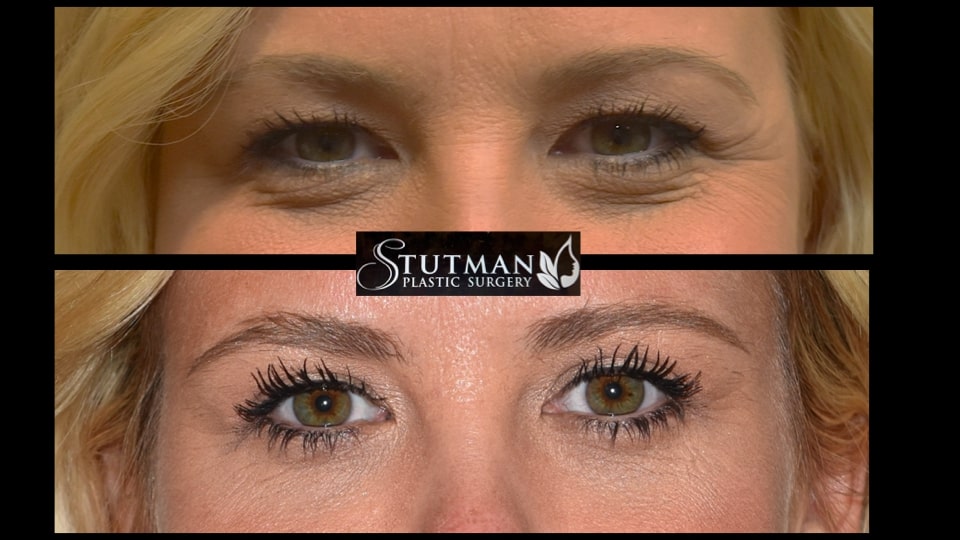
Individual results may vary.
View the galleryPossible Complications from Blepharoplasty
There are some possible risks or side effects from eyelid surgery, although most are short-lived. For example, you may experience some bleeding at the incision lines, difficulty closing your eyes, or dryness. Most people have sensitivity to the sun or other bright lights, swelling, and bruising for the first week.
You may also experience changes to the sensation on your eyelids and numbness of your eyelashes. This typically resolves as the skin heals. Dr. Stutman will discuss these risks and answer all your questions before you sign consent for surgery so you fully understand what you can expect during blepharoplasty recovery in Scottsdale.


How Long Do the Results Last?
The results are generally long-lasting. Many people find the effects last for up to 15 years or more. However, the length of your results after blepharoplasty will depend on several factors, including your age, lifestyle, and the natural aging process.
Upper eyelid surgery tends to last longer than lower eyelid surgery. Lower eyelid surgery may require a touch-up after several years, especially if fat deposits reappear. Although the procedure addresses sagging or drooping eyelids, it does not stop the natural aging process.
Your skin loses elasticity as you age, and you can develop new wrinkles. Exposure to the sun, smoking, and genetics also impact how long the results will last. You can prolong the results of your procedure by following good skin care practices, using quality sun protection, and adopting a healthy lifestyle.
Learn More About Blepharoplasty Recovery in Scottsdale
Recovering from a blepharoplasty procedure is usually straightforward and not challenging. Most swelling and discomfort are usually gone within the first seven to 14 days, leaving a more alert and refreshed appearance. We encourage you to call our office today and schedule your appointment to learn more about blepharoplasty recovery in Scottsdale.


Why patients choose Dr. Stutman for blepharoplasty recovery
- Board certified
- Certified by the American Board of Plastic Surgery and a member of the American Society of Plastic Surgeons.
- Fellowship trained
- Oculoplastic and aesthetic surgery fellowship with Dr. Mark Codner in Atlanta.
- Published research
- Peer-reviewed research in aesthetic and reconstructive plastic surgery, indexed in PubMed.
- One surgeon throughout
- Dr. Stutman sees you at consultation, performs your procedure and follows your recovery.
Blepharoplasty Recovery
FAQs
- How do I reduce swelling and bruising after eyelid surgery?
- How should I sleep after blepharoplasty?
- Is it normal to have dry eyes after eyelid surgery?
- Can I wear makeup after eyelid surgery?
- What are warning signs after eyelid surgery that I should call about?
- What will Dr. Stutman put on my eyelids after surgery?
- How does Dr. Stutman want me to protect my eyelid scars?
How do I reduce swelling and bruising after eyelid surgery?
The best way to reduce swelling and bruising after eyelid surgery is to keep your head elevated and use cold pads over your eyes as directed. Rest, avoid bending over or straining, and skip blood-thinning medicines and alcohol unless your surgeon approves them. Bruising, swelling, and a tight feeling around the eyes are normal and improve gradually.
How should I sleep after blepharoplasty?
After blepharoplasty, sleep on your back with your head raised, using a couple of pillows or a recliner to keep your head above your heart. Elevation helps fluid drain away from the eyes and reduces swelling and pressure on the incisions. Keep your head elevated when lying down to rest during the day, too, not just overnight.
Is it normal to have dry eyes after eyelid surgery?
Yes, dry, gritty, or irritated eyes are common after eyelid surgery and usually improve as swelling settles. Swelling can keep the lids from closing completely, which lets the eye surface dry out. Use the eye drops and ointments your surgeon prescribes exactly as directed. Dryness that keeps getting worse, or comes with pain or blurred vision, should be checked.
Can I wear makeup after eyelid surgery?
Do not wear eye makeup after eyelid surgery until your surgeon clears you, which is usually after the stitches are out and the incisions have closed. Makeup on healing incisions can cause irritation or infection. When you start again, use fresh, new products, apply them gently, and remove them carefully without pulling on your eyelids.
What are warning signs after eyelid surgery that I should call about?
Call your surgeon right away after eyelid surgery if you have severe or worsening pain, swelling that suddenly increases on one side, bleeding that will not stop, or any change in your vision. Fever, spreading redness, or pus can signal infection. Sudden pain with a firm, bulging eye and vision loss is an emergency, so call immediately or go to an emergency room.
What will Dr. Stutman put on my eyelids after surgery?
Dr. Stutman typically applies ointment to your eyelids at the end of eyelid surgery to protect the incisions and keep your eyes moist. You will go home with instructions for using eye drops and ointment, which help lower the risk of infection. Expect your vision to be a little blurry from the ointment at first, which is normal.
How does Dr. Stutman want me to protect my eyelid scars?
Dr. Stutman asks patients to keep healing eyelid scars out of direct sun, since sun exposure can darken scars and make them more noticeable. Wear sunglasses and a wide-brimmed hat outdoors, and keep protecting the area even after it looks healed. Once he clears you, a daily sunscreen suited to the eye area adds protection.

Consultation
Begin with a conversation
Your consultation is a private conversation with Dr. Stutman about your goals, your questions, and the options that suit you.
(602) 853-4646Contact pageRequest a consultation
Tell us a little about what you are considering and our team will call you to arrange your visit.
Request a ConsultationPrefer to talk? Call (602) 853-4646